Diagrams
There are two diagrams that appear in this manuscript that are important to understanding The Divine Comedy. One is a diagram of the sphere of Hell, and the other is a diagram of the sphere of Heaven. Both appear in red ink and occupy their own individual pages. The diagram of Hell appears on the page before Inferno, and the diagram of Heaven appears on the page before Paradiso; each diagram depicts the various “spheres,” or layers, that make up each realm. They each serve as a map, or a visual aid, for Dante’s readers to use while navigating through the realms along with him. The first image is the diagram of Hell, which consists of eight concentric circles, each noted by “circulus.” In the poem, there are eight circles of Hell. The second image is the diagram of Heaven, of which there are nine concentric circles representing nine Heavens. The eighth heaven consists of the stars, which are illustrated around the circle. The larger star shapes that appear on the page represent the planets and the Sun.
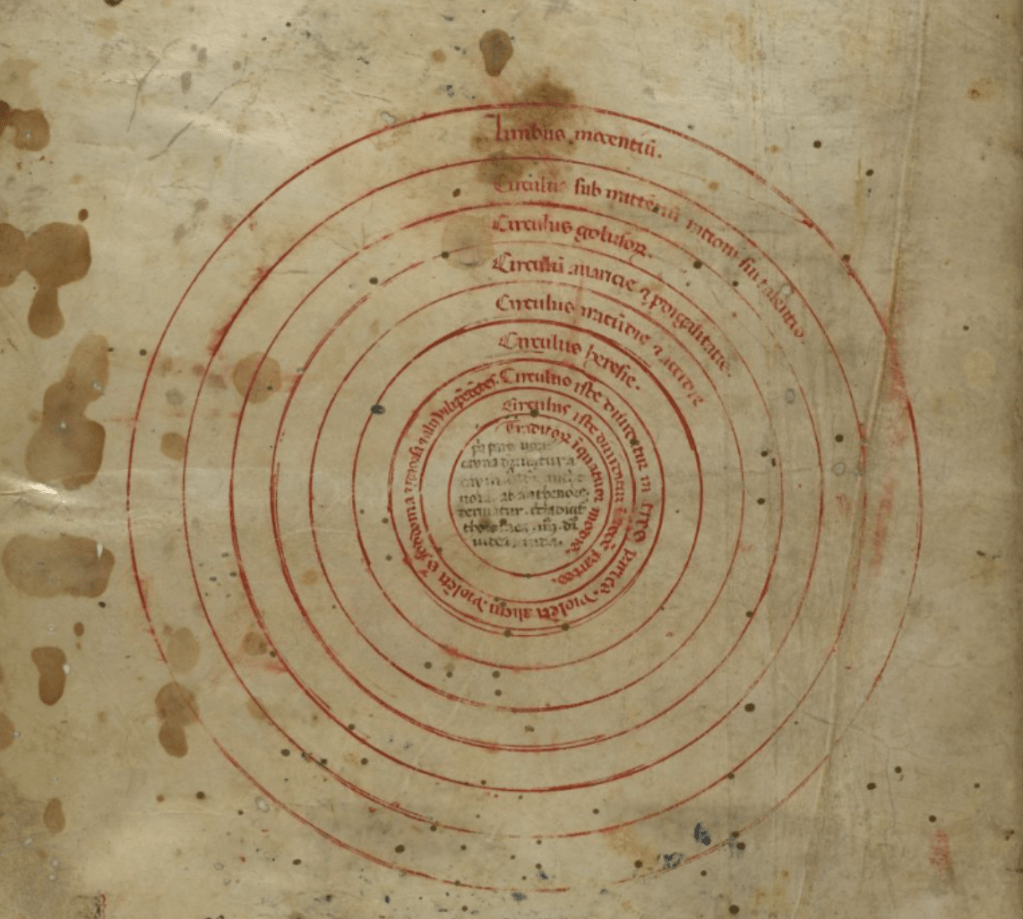
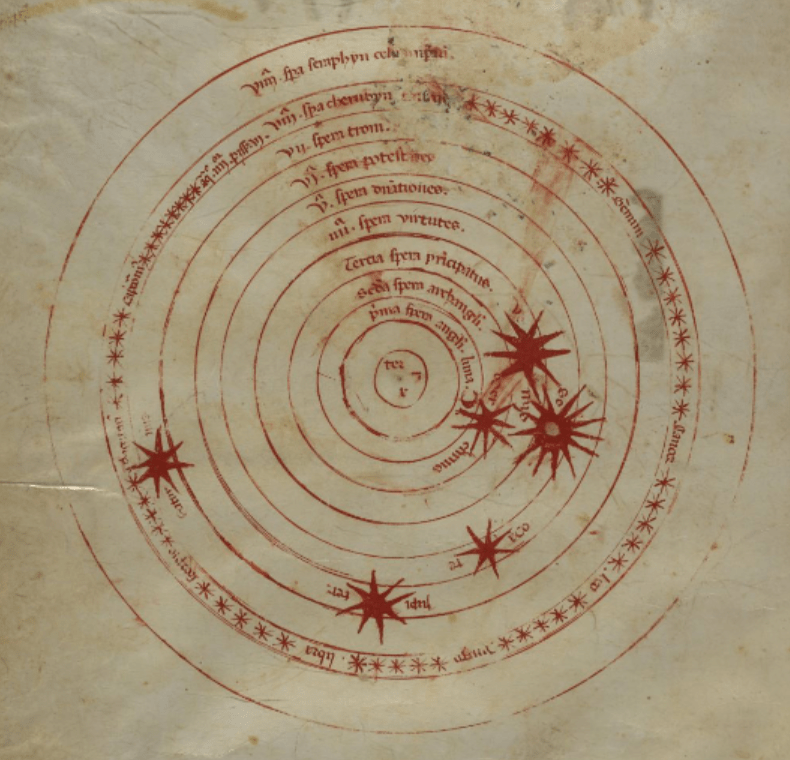
These diagrams provide insight into the minds of medieval people and how they thought about the physical aspects of Heaven and Hell. However, the manuscript does not include a diagram of Purgatory. Instead, the illustrations from Purgatorio help us understand a medieval perception of Purgatory.
Illustrations
This manuscript contains a lot of illustrations; 261 miniatures to be exact. These appear in line with the text and aim to depict scenes from the text. According to Charles Sarolea, “Most of the artists who tried to follow the Comedy failed” (Preface ix). Although the artist of this manuscript is unknown, Ludwig Volkmann asserts that the miniaturist’s “execution is not very great”(47). Even so, the illustrations that appear throughout definitely contribute to the reader’s understanding of what is going on in the main text, especially being someone who does not know how to read Italian or Latin.
Below is a comparison of two illustrations from two different manuscripts depicting Dante and Beatrice with the eagle of Justice.
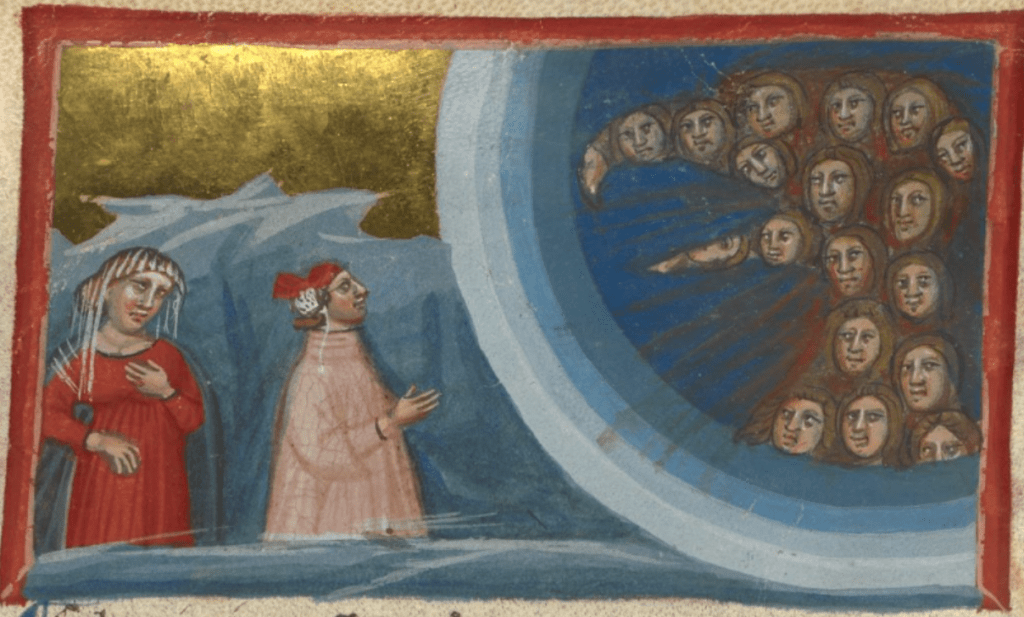
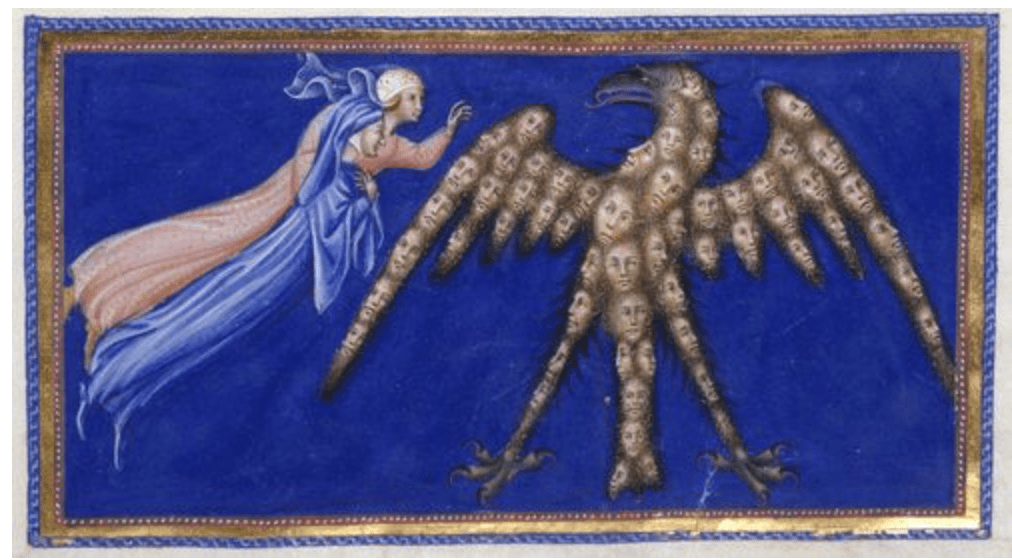
As you can tell, the illustration found in my Egerton manuscript is significantly less detailed in terms of human bodies, clothing, the frame of the image, and the eagle. The shape that is supposed to be an eagle does not necessarily look like an eagle but more like a random collage of human faces. In addition, the illustration is very flat compared to the other one, which has an element of depth that makes both the figures of Dante and Beatrice as well as the eagle look like they are coming out of the page. In addition, the lines on the first image are not as distinct as the lines in the second image, which also contributes to the flatness of the image.
The blog post on the British Library website that includes a short introduction and some information about the manuscript I used for comparison, Yates Thompson MS 36, can be found here: https://blogs.bl.uk/digitisedmanuscripts/2013/03/to-hell-and-back-dante-and-the-divine-comedy.html
 Divina Commedia