The binding of this manuscript is composed of gold-tooled red leather over wooden boards. In the book, the process of binding that included wooden boards was that the quires would first be sewn, one by one, onto several sewing supports (thongs or cords). The ends of the sewing supports would go into the wooden boards that served as the front and back covers. Finally, the boards would be covered with skin. In this case, it is red leather. Next, the quires would be attached to the sewing supports by suspending the supports vertically on a frame. This manuscript probably had more supports since it was bound later on. Then, the process of sewing the quires on, one by one, would begin.
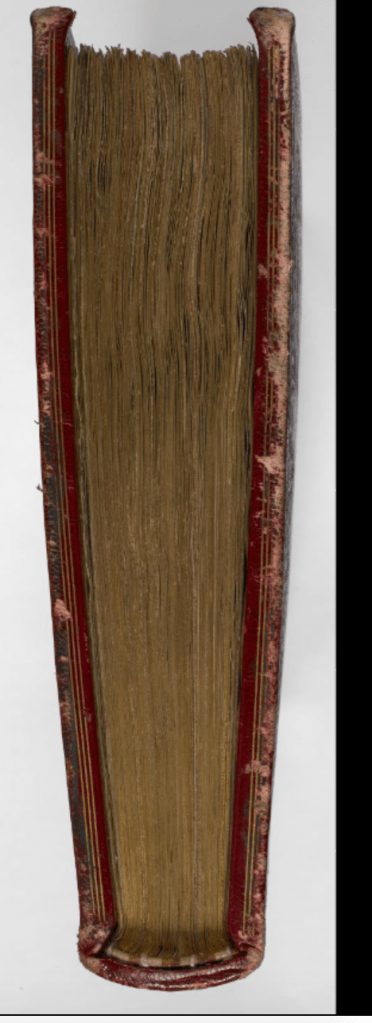
In the late Middle Ages, it was common for the skins to be brightly colored. It is also characteristic of medieval bindings that the edges of the boards are even with the edges of the leaves. It appears this is the case for this manuscript as well. This manuscript binding was tooled with gold, a process called blind-tooling. This is the process in which a simple pattern is worked into the leather with a hot metal tool. This binding also has “gilt edges,” which are of the highest quality.

Although the binding of this manuscript is characteristic of medieval bindings, it was not completed in the Middle Ages. The medieval period, or the Middle Ages, dates roughly between the years of 476 and 1453 AD. However, this binding is dated post-1600. Therefore, it must have been rebound.

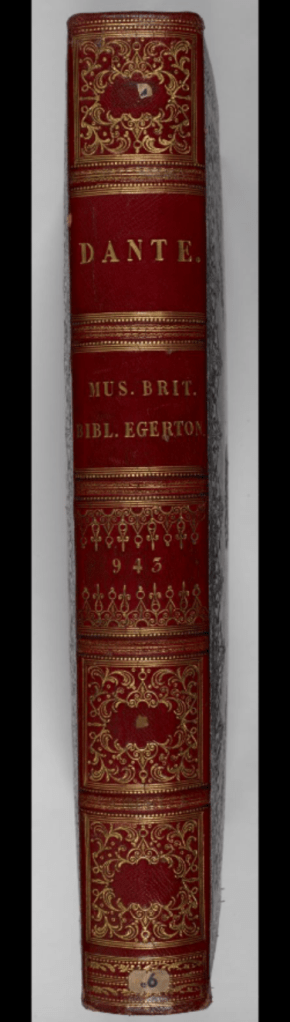
 Divina Commedia