Materials
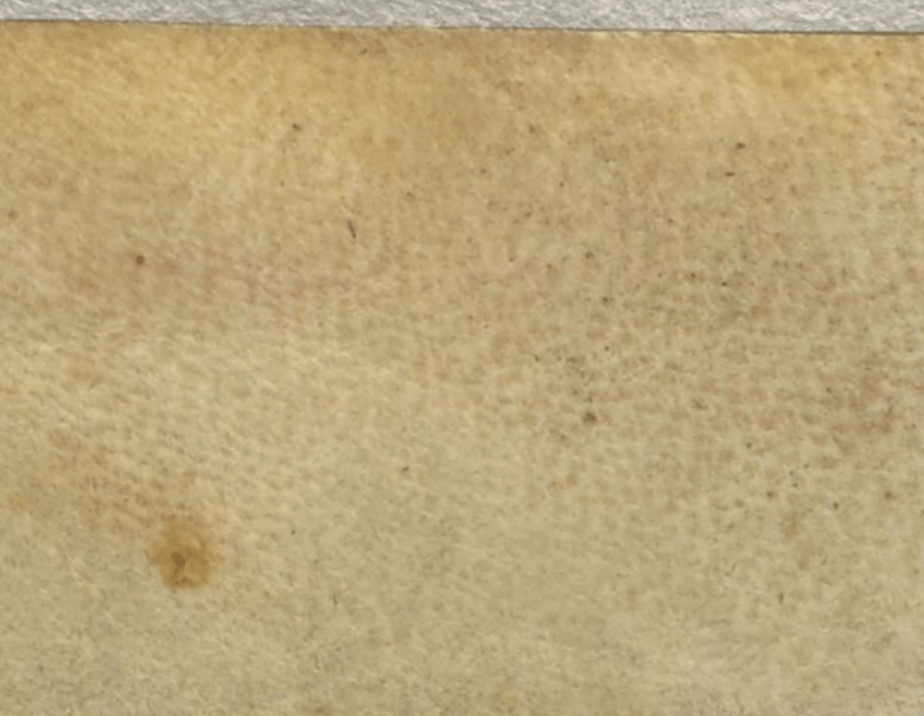
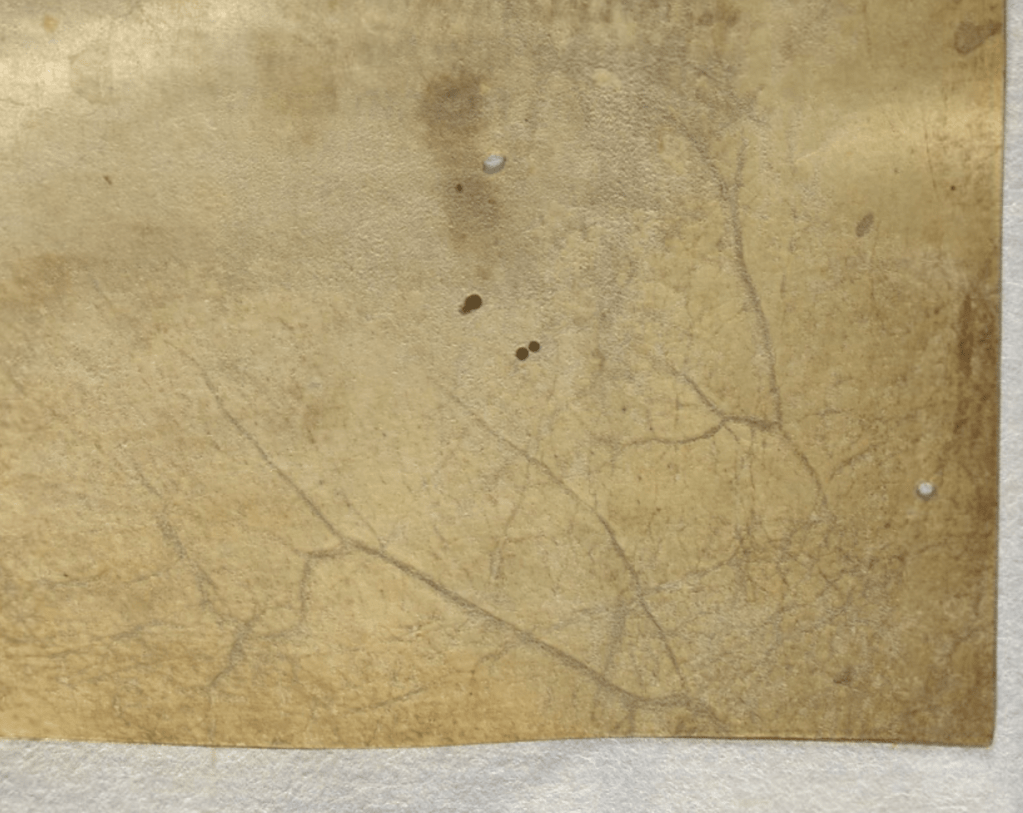
A majority of medieval manuscripts were written on parchment, or a writing surface made of animal skins (Graham & Clemens 9). This was probably made of goat skin since those were the most common in Italy and Greece. This manuscript is primarily made of parchment but also includes some paper. In order to differentiate parchment from other writing surfaces, you can look at evidence that appears on the hair-side and the flesh-side. For example, the hair-side of the parchment often has what is called “peppering,” or little dots where hair follicles used to be (14). This can be seen in the first image below. The second image shows veining that may appear on the flesh-side of parchment.
Structure
Foliation
One folio, or leaf, consists of one recto and one verso. Today, a folio would be a single piece of paper with the recto being the front side, or the front page, and the verso being the back side, or the flip side of the page (Graham and Clemens 3). The term foliation refers to how the leaves of a manuscript are constructed and how someone wrote the folio numbers. Unlike page numbers, folio numbers appear only on the front side of a leaf. For example, instead of being page 1 followed by page 2, folio 1 consists of folio 1r (recto) and folio 1v (verso).
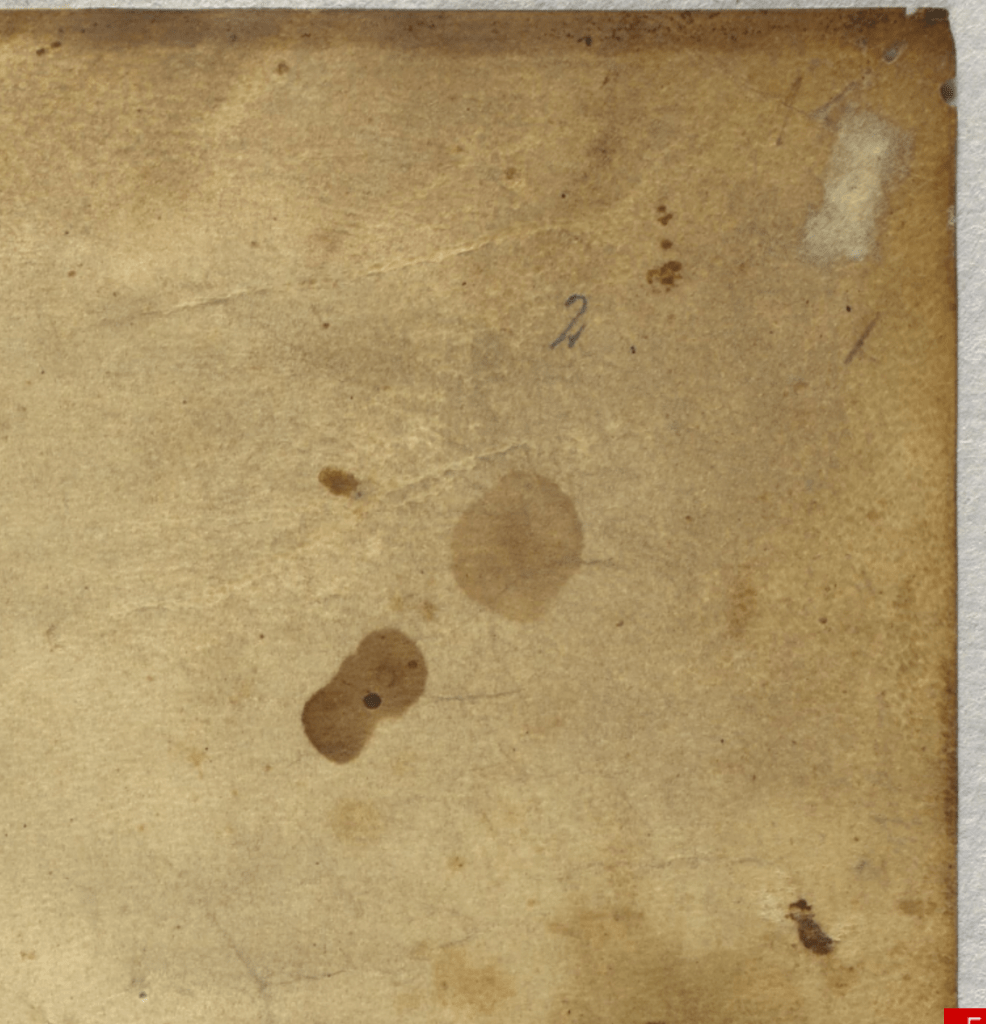
La Divina Commedia consists of a total of 188 folios. That would be 376 “pages” of a novel in today’s terminology. Folios 2v-62r make up Inferno, folios 63r-126r make up Purgatorio, and folios 129r-186r make up Paradiso. Folio 1 is an added paper leaf. Folio 188 is constructed of a parchment flyleaf plus one paper. There are also 2 parchment and 1 paper flyleaves at the beginning, and 2 parchment and 1 paper flyleaves at the end, all unfoliated. The other folios are made of parchment.
Collation
A quire is the result of folding together multiple sheets of parchment or paper to form leaves that are eventually linked together to form a book. A bifolium is one sheet folded in half; the plural is bifolia. The term collation refers to how the quires of a manuscript are arranged, how many quires there are, how many bifolia make up each quire, and how they are foliated. Quire sizes varied in the Middle Ages, but the most common quire structures were eight or ten leaves (14).
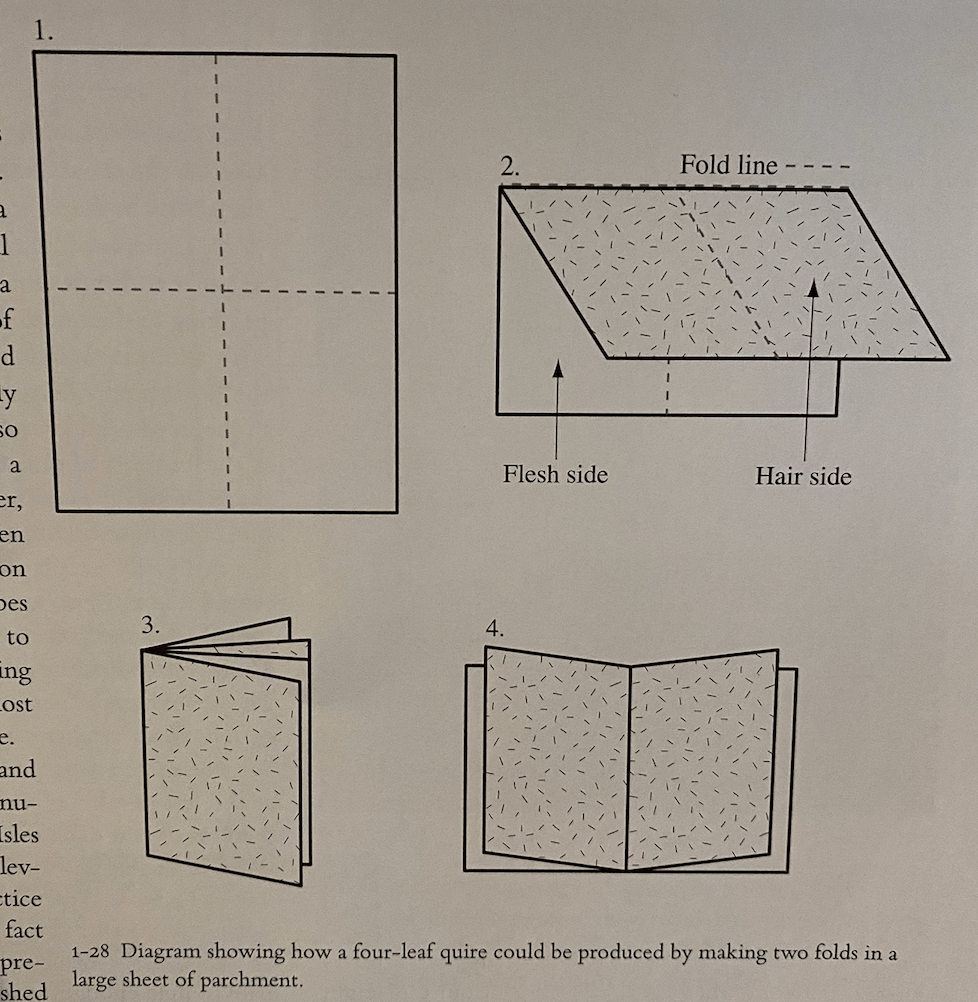
This is a diagram of a four-leaf quire structure from Graham and Clemens (15).
This manuscript consists of 19 quires of differing sizes. Folios 3-122 make up quires 1-12, each consisting of 10 leaves. Folios 123-128 make up quire 13 and consist of 6 leaves. Folios 129-178 make up quires 14 through 18, each consisting of 10 leaves. Folios 179-186 make up quire 19. This specific quire is peculiar because it is a quire of 8 leaves that was probably originally a quire of 10, with the last two leaves excised. The last folios 187 and 188 are two single parchment leaves.
 Divina Commedia